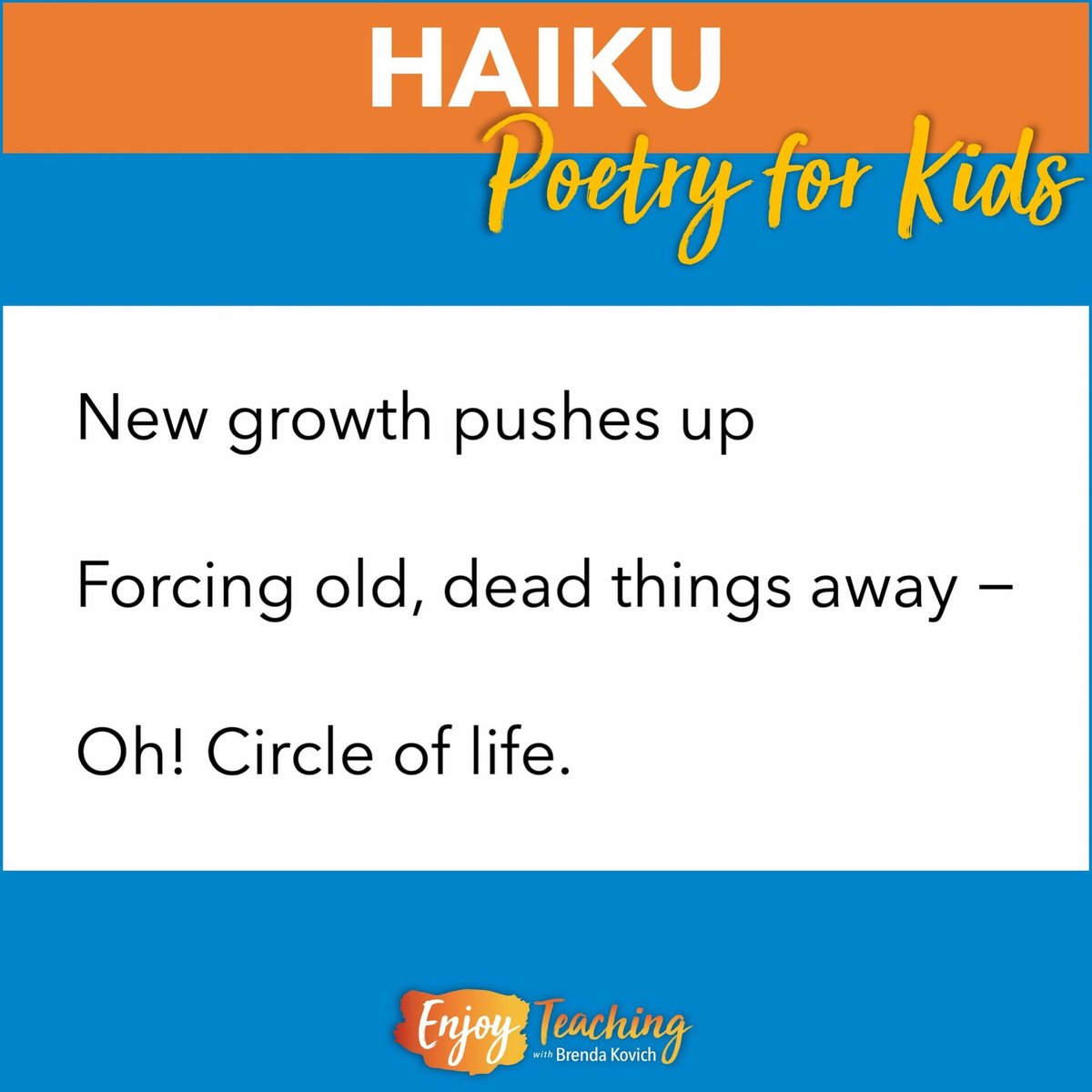
The haiku, with its deceptively simple 5-7-5 syllable structure, has captivated poets and readers for centuries. It's a precise art form, designed to capture a fleeting moment, a subtle observation, or a sudden insight, often drawing heavily from nature. In our increasingly digital world, tools like haiku generators have emerged, promising to simplify this ancient practice. But how do you ensure these powerful tools enhance, rather than diminish, your poetic intent? This guide dives deep into How to Use Haiku Generators Effectively for poems that truly resonate, blending technological assistance with timeless artistic principles.
At a Glance: Mastering Haiku Generators
- Generators are co-creators: View them as assistants, not replacements for your poetic voice.
- Prompts are paramount: The quality of your haiku directly correlates with the clarity and specificity of your input.
- Iterative refinement is key: Never settle for the first draft. Generate multiple versions and cherry-pick the best elements.
- Verify structure manually: Always double-check syllable counts – generators aren't infallible.
- Prioritize authenticity: Start with your own observation or emotion, then use the generator to help sculpt it.
- Embrace the "spirit": Go beyond syllable counting; strive for Kigo (seasonal reference), Kireji (cutting word), and Juxtaposition.
The Enduring Allure of Haiku: More Than Just a Syllable Count
Before we unleash the power of algorithms, it’s crucial to understand what makes a haiku, well, a haiku. Many mistakenly believe it’s merely a three-line poem with a 5-7-5 syllable pattern. While that structure is fundamental, traditional Japanese haiku is much richer, aiming to capture a moment of profound awareness or insight through concise imagery.
The Core Elements of a True Haiku:
- Structure: Three lines, seventeen syllables total, arranged in a 5-7-5 pattern. This is non-negotiable for form, but the spirit goes deeper.
- Kigo (Seasonal Reference): A word or phrase that clearly indicates the season. Think "cherry blossoms" (spring), "cicadas" (summer), "crisp air" (autumn), or "snow-capped" (winter).
- Kireji (Cutting Word): A rhetorical device, often a punctuation mark or a specific word, that creates a pause, a break, or a shift in the poem. It’s the "aha!" moment or the slight shift in perspective that gives haiku its depth.
- Juxtaposition: The act of placing two contrasting or unexpected images, ideas, or sensations side-by-side. This tension often occurs between the first two lines and the third, or within the lines themselves, inviting the reader to bridge the gap.
- Simplicity & Nature: Direct, concrete language is preferred over abstract concepts. Traditional haiku often focuses on imagery from nature, capturing a fleeting, observed moment.
Consider the classic by Matsuo Bashō:
An old silent pond...
A frog jumps into the pond—
Splash! Silence again.
Here, we see the 5-7-5 structure, a clear moment of observation (the frog’s jump), and a beautiful juxtaposition between the initial silence, the sudden splash, and the return to quietude. There’s a Kireji implied by the dash and exclamation, creating a vivid break. Understanding these elements is your first step toward using a haiku generator effectively, because it informs what you should be asking the AI to do.
What Exactly is a Haiku Generator, and How Does it Work?
At its core, a haiku generator is an AI-powered tool designed to assist in creating haiku poems. You typically provide:
- Keywords: One, two, or three words that define the subject or theme.
- Writing Style (Optional): Some advanced generators might offer options like "witty," "somber," "philosophical," "nature-focused," or "romantic."
Based on your input, the generator uses algorithms and vast language models to produce a three-line poem that attempts to adhere to the 5-7-5 syllable structure. While impressive, these tools are often programmed to prioritize syllable count and word association, sometimes at the expense of the deeper poetic elements like Kigo or Kireji. This is precisely where your skill as a human poet comes in. You can create your own haiku poems with these tools, but the real art is in guiding them.
The Art of the Prompt: Guiding Your AI Muse to Better Haiku
Think of the haiku generator not as an automatic poem dispenser, but as a highly intelligent, albeit literal-minded, apprentice. Its output will only be as good as the instructions you provide. This means your prompts need to be clear, specific, and intentional.
1. Start with a Strong Vision or Observation:
Just as you would when writing a haiku manually, begin with a moment, an emotion, or an image you want to capture. Is it the way the light filters through autumn leaves? The sound of rain on a tin roof? A sudden feeling of solitude?
Poor Prompt: "Write a haiku about nature." (Too broad, will likely yield generic results)
Better Prompt: "Write a haiku about autumn leaves falling in a forest clearing that includes a moment of surprise." (Specific theme, setting, and desired emotion)
2. Leverage Keywords to Direct Imagery:
Your keywords are the generator's anchor. Choose them wisely. Instead of abstract nouns, lean into concrete images or sensory details.
- Instead of: "Love, peace, joy"
- Try: "Sunset glow, ocean breeze, silent shore"
If you want a traditional haiku, ensure your keywords hint at a Kigo or natural imagery. For example, instead of "cold," try "first frost" or "winter's breath."
3. Direct the AI Towards Kigo (Seasonal Reference):
Most generators won't automatically embed a Kigo unless you prompt them to. Explicitly include seasonal cues in your input. - Prompt Idea: "Write a haiku about a spring morning, focusing on cherry blossoms and gentle rain."
- Keywords: "Cherry blossoms, spring rain, fresh awakening"
4. Hint at Juxtaposition or a Shift:
This is harder to prompt directly, but you can guide the AI by suggesting contrasting elements or a narrative arc within the brief structure. - Prompt Idea: "Write a haiku about a city street at dawn, contrasting the quiet with the promise of awakening noise."
- Keywords: "Silent dawn, city sleeps, first bird sings" (Here, "silent dawn" and "first bird sings" imply the contrast).
5. Specify a Desired Tone or Style:
If your generator offers style options, use them. If not, integrate tonal words into your prompt. - Prompt Idea: "Write a melancholic haiku about fading summer memories."
- Keywords: "Fading light, summer end, whispered breeze, memory"
Examples of Effective Prompts: - "Write a haiku about the first snowfall, emphasizing stillness and the quiet transformation of the landscape."
- "Create a haiku about a bustling market, capturing the smells of spices and the cacophony of voices, with a sense of vibrant energy."
- "Generate a haiku about a lone bird singing at sunset, conveying a feeling of peace and the day's gentle close. Include a reference to a specific season, like late summer."
The more detail you provide, the better the AI can understand your vision and create your own haiku poems that align with it.
Iterative Refinement: Polishing AI-Generated Drafts into True Haiku
Very rarely will a haiku generator produce a perfect, publish-ready poem on its first attempt. The real power of these tools lies in using them as a starting point for iteration and refinement. Think of the AI as a sculptor creating a rough block of marble; it's up to you to add the nuanced details.
1. Generate Multiple Versions:
Don't stop at the first output. Request several variations of your haiku using the same prompt or slightly modified keywords. This increases your chances of finding compelling lines or imagery. You can often ask the AI to "try again" or "give me another version."
2. Scrutinize the Syllable Count (Crucial Step!):
AI generators are good, but not perfect, at syllable counting, especially with nuanced English pronunciation. Always manually verify the 5-7-5 structure of each line. This is non-negotiable. If a line is off by a syllable, you become the editor.
- Example AI Output:
- Green leaves in the breeze (5)
- Whispering secrets to the wind (7)
- Nature's soft embrace (6) - Oops! Needs adjustment.
- Your Edit:
- Green leaves in the breeze (5)
- Whispering secrets to the wind (7)
- Soft nature's embrace (5) - Perfect!
3. Look for Kigo and Kireji:
Does the poem contain a seasonal reference? If not, can you easily add one by swapping a word? Does it have a natural pause or shift that creates deeper meaning? If the AI hasn't included one, consider where you could introduce a dash, an ellipsis, or a strong verb to create that "cutting" effect.
4. Evaluate Imagery and Juxtaposition:
Are the images vivid and concrete? Do they create an interesting tension or reveal a new perspective? Sometimes, AI-generated lines might be too generic. This is your chance to swap out weak words for stronger, more evocative ones.
5. Combine and Conquer:
Often, one generated haiku will have a brilliant first line, another a perfect middle, and a third a striking conclusion. Don't be afraid to mix and match. Take the best elements from various outputs and combine them into a single, cohesive poem. This is where your creative judgment shines.
6. Simplify and Polish:
Haiku values simplicity and directness. Remove any unnecessary words, adverbs, or complex phrasing. Each word in a haiku must pull its weight. Read the poem aloud to check its rhythm and flow.
By adopting this iterative, hands-on approach, you transform the generator from a simple tool into a powerful creative partner, allowing you to craft a haiku poem that truly feels your own.
Beyond Generation: Using AI for Inspiration and Structural Checks
Haiku generators aren't just for creating full poems. They can be invaluable aids at various stages of your writing process, even when you're mostly writing by hand.
1. Brainstorming Themes and Concepts:
Stuck for an idea? Ask the AI: "Give me five ideas for a haiku about spring, focusing on unexpected details." Or, "Suggest themes for a haiku that evoke both joy and melancholy." This can kickstart your creativity.
2. Suggesting Kigo (Seasonal Words):
If you have a season in mind but are struggling for specific, evocative Kigo, ask the generator: "Suggest Kigo for a winter haiku" or "What are some strong Kigo for summer?" This can provide a rich list of words to integrate into your poem.
3. Finding Juxtaposition Ideas:
Ask the AI to generate image pairings: "Give me contrasting images for a haiku about urban nature" or "What two things could juxtapose in a haiku about an old person and a child?"
4. Syllable Checker and Line Refinement:
Have a line you love but aren't sure of its syllable count? Type it into the generator and ask it to confirm. Or, if a line is 6 syllables and you need 5, ask: "Can you rephrase 'the glorious summer day' to be 5 syllables?" This can be a quick and efficient way to refine your poem's structure.
5. Exploring Different Angles:
Input the same keywords but ask for different styles or perspectives: "Write a haiku about the ocean waves, first from a detached observer's view, then from a swimmer's perspective."
Using the AI in these targeted ways allows you to maintain full creative control while leveraging its speed and linguistic database for specific tasks. It truly helps you create your own haiku poems with more informed choices.
Maintaining Authenticity: Your Voice, AI's Helper
The greatest pitfall of using haiku generators is losing your unique voice and the authentic spark of human observation. A haiku generated entirely by AI, without human intervention, can often feel sterile or generic. The goal is a collaboration, not full automation.
1. Start with Your Own Observation:
The most powerful haiku spring from personal experience or a keen observation of the world around you. Begin with your thought, your feeling, your moment.
- Initial thought: "The way the light hits the dusty bookshelf in the morning."
- Then, prompt the AI: "Write a haiku about morning light on a dusty bookshelf, conveying a sense of quiet nostalgia."
2. Use AI to Structure and Refine Initial Ideas:
Once you have your core idea, the AI can help with the heavy lifting of finding words that fit the 5-7-5 structure or suggesting different ways to phrase your thoughts while adhering to the syllable count.
3. Edit for Personal Perspective:
The AI's suggestions are raw material. Your job is to imbue them with your personal touch. Does the language truly reflect your feeling? Are there more specific, unique words you can use? Does it sound like your observation? This step is crucial for transforming a machine-generated poem into a piece of art that speaks to the human experience.
4. Consider the Haiku a Collaboration:
Embrace the process as a partnership. You provide the artistic vision and final polish; the AI provides the computational power and linguistic variations. This collaborative model ensures that the resulting haiku remains deeply human at its core, even if assisted by technology. When you create your own haiku poems this way, the authorship is still truly yours.
Common Pitfalls When Using Haiku Generators (and How to Avoid Them)
Even with the best intentions, it's easy to stumble when integrating AI into your creative process. Being aware of these common mistakes can save you frustration and lead to better results.
1. Over-Reliance on the First Draft:
Pitfall: Accepting the first haiku the generator spits out, assuming it's "good enough."
Avoid: Always generate multiple versions and dedicate time to the iterative refinement process. The first draft is rarely the best.
2. Neglecting Manual Syllable Counts:
Pitfall: Trusting the AI implicitly to get the 5-7-5 structure perfect every single time.
Avoid: Make manual syllable counting a non-negotiable step. Use online syllable counters as a double-check if unsure.
3. Losing the "Haiku Spirit":
Pitfall: Focusing solely on the 5-7-5 and forgetting the deeper elements like Kigo, Kireji, and Juxtaposition, leading to generic or bland poems.
Avoid: Actively prompt the AI for these elements, and then critically review its output. If they're missing, incorporate them during your editing phase. Remember the Bashō example and its layers of meaning.
4. Using Vague or Abstract Prompts:
Pitfall: Giving the generator inputs like "poem about feelings" or "haiku about life," which are too broad for specific imagery.
Avoid: Be concrete and specific. Think sensory details, observable moments, and clear emotions. "Write a haiku about the scent of rain on dry earth after a summer storm" is far more effective than "rain haiku."
5. Lack of Personal Connection:
Pitfall: Letting the AI do all the creative heavy lifting, resulting in a poem that feels uninspired or detached.
Avoid: Always start with your own observation or emotional response. Use the AI to aid your creativity, not replace it. Your personal touch is what elevates a poem from words on a page to a piece of art.
6. Repetitive Output:
Pitfall: Constantly getting similar-sounding haiku, especially if you use the same few keywords or prompts.
Avoid: Experiment with a wider range of keywords, different stylistic prompts, and ask for contrasting perspectives. Varying your input will lead to more diverse and interesting outputs, making the process of how to create your own haiku poems more dynamic.
Frequently Asked Questions About Haiku Generators
Q: Can AI write good haiku?
A: AI can generate haiku that adhere to the 5-7-5 structure and often contain evocative imagery. However, "good" haiku often require the nuanced touch of human emotion, observation, and understanding of concepts like Kireji and true juxtaposition. AI is an excellent assistant, but the final judgment and polish typically come from a human.
Q: Are AI-generated haikus "real" haikus?
A: If a poem generated by AI meets the structural and thematic requirements of a haiku (5-7-5, Kigo, Kireji, Juxtaposition, Simplicity), then yes, it can be considered a real haiku. The question is more about authorship and the process of creation. With human guidance and editing, an AI-assisted haiku can absolutely be a "real" and impactful poem.
Q: What if my haiku generator doesn't have style options?
A: If your generator is more basic, you'll need to be even more deliberate with your keywords and prompt phrasing. Use adjectives and adverbs within your keywords to hint at the desired tone (e.g., "gloomy forest," "sparkling stream," "whispered secret"). You can also specify the mood in your overall instruction (e.g., "Write a serene haiku about...").
Q: How do I handle obscure words or proper nouns with a generator?
A: Most generators will struggle with very obscure words or proper nouns, as they might not be in their training data or might throw off syllable counts. It's best to use more common language for keywords. If you must use a specific proper noun, use it as part of a larger, descriptive phrase to give the AI context.
Q: Is it ethical to use a haiku generator for creative writing?
A: This is a widely debated topic in the creative community. Most agree that using AI as a tool for brainstorming, drafting, or editing is ethical, especially if you disclose its use. Passing off entirely AI-generated work as purely your own, without any human intervention or credit to the tool, is generally viewed as problematic. Transparency and the amount of human input are key considerations.
The Human-AI Collaboration: A Path to Deeper Poetic Expression
The journey into How to Use Haiku Generators Effectively is one of collaboration, critical thinking, and a steadfast commitment to the core principles of haiku. These tools offer incredible potential for overcoming writer's block, exploring new perspectives, and refining your craft. Yet, their true value is unlocked when you approach them as a seasoned artist would approach a new set of brushes or a different type of canvas.
Begin with your heart and your observation. Guide the machine with clear, thoughtful prompts. Refine its output with a keen eye for syllable count, poetic spirit, and authentic voice. By blending the speed and computational power of AI with your unique human insight and creativity, you won't just generate haiku; you'll craft poems that resonate, capturing those fleeting moments with a depth that is truly your own. So, go forth and experiment. The world of haiku awaits your collaboration. Why not create your own haiku poems right now and experience this synergy for yourself?